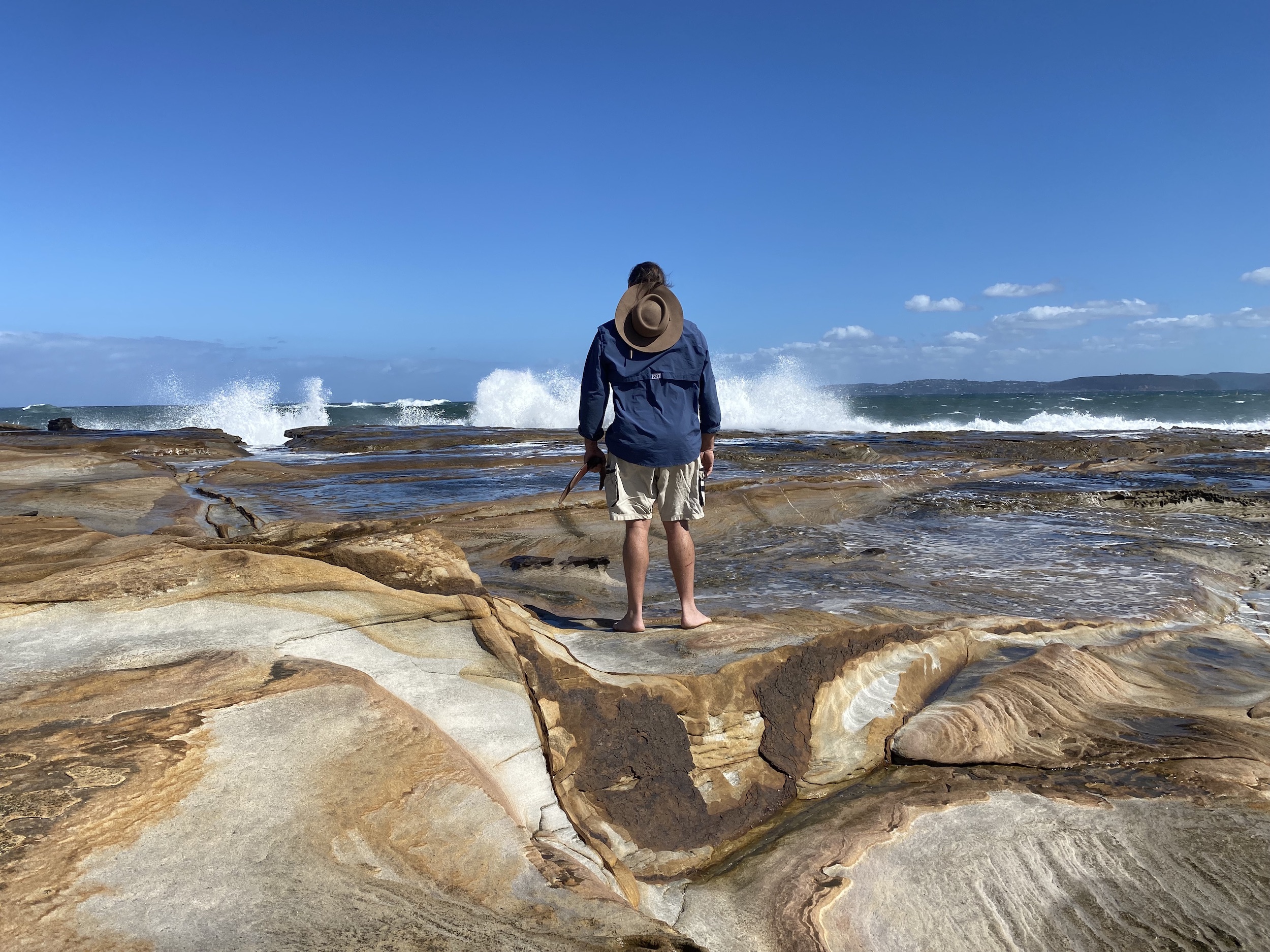
I didn’t think I’d ever find myself here, hand pressed to the belly of a pregnant humpback whale. Not in this life. Not like this. The rock beneath me was warm, the wind salted and restless. Overhead, yellow-tailed black cockatoos wheeled and squawked, their calls rattling like old hinges in the afternoon air.
Tim Selwyn, my guide from Girri Girra Aboriginal Experiences, stood beside me, his voice seasoned, full of knowing.
‘She’s been here a long time,’ he said, nodding toward the carved etching of the whale, her pectoral fins stretched wide, her belly gently curved. ‘A gift left for us. A reminder.’
The Central Coast is a place where everything speaks, if you care to listen. The land, the sea, the sky. And for the ancestors of this land, the Darkinjung people, the humpback is not just a creature passing through. She’s kin. A message written in salt and song.
Up here on the Hardys Bay Trail, two whales are set into the rock. The female is broad and strong, her presence heavy with the weight of new life. The male moves along, stretching 10 m, and in front of her. Tim is crouched beside me, palm against the stone.
‘Balance,’ he says simply. ‘Men and women. Father Sky and Mother Earth. The ocean, the rivers, the mountains. We all become one.’
The old people understood this rhythm. The whales weren’t just passing through; they were part of it, woven into the great, breathing fabric of the world. The elder whales, the ones who’d seen too many winters, would beach themselves when it was time, offering up their bodies to the saltwater people. A final gift. And the people, in turn, would honour them, using every part – blubber for oil, bone for tools, meat for the long, lean seasons.
Some say the old people would even climb inside, sleeping in the belly of a whale for days, letting its oils soak into their skin. It was medicine, they reckoned. Good for arthritis, for the slow aches of age. Imagine that. Held in the dark hush of a great body, cradled by something that had moved through the deep for years beyond counting.
‘The women sang to them,’ Tim says. ‘Their songs are high-pitched, like the whales themselves. Sometimes, if you’re in the water and you try it, they’ll answer.’
I swallowed, listening. The cockatoos had gone quiet now. The ocean breathed below us, steady and endless.
‘When the golden wattle blooms the whales are here,’ Tim continued, ‘Just like it tells us when the salmon are running, when the seasons are turning. The old people knew. They watched, listened, learned. They belonged to it, the way the whales belong to the sea.’
We started back, the sandstone warm underfoot, the bush thick with the scent of gum. Tim turned, grinning. ‘You’ll never see whales the same way again,’ he said.
And he was right.
Because now, I’d placed my hand on the belly of a pregnant humpback – one that had been waiting here for thousands of years, telling her story to anyone willing to listen.
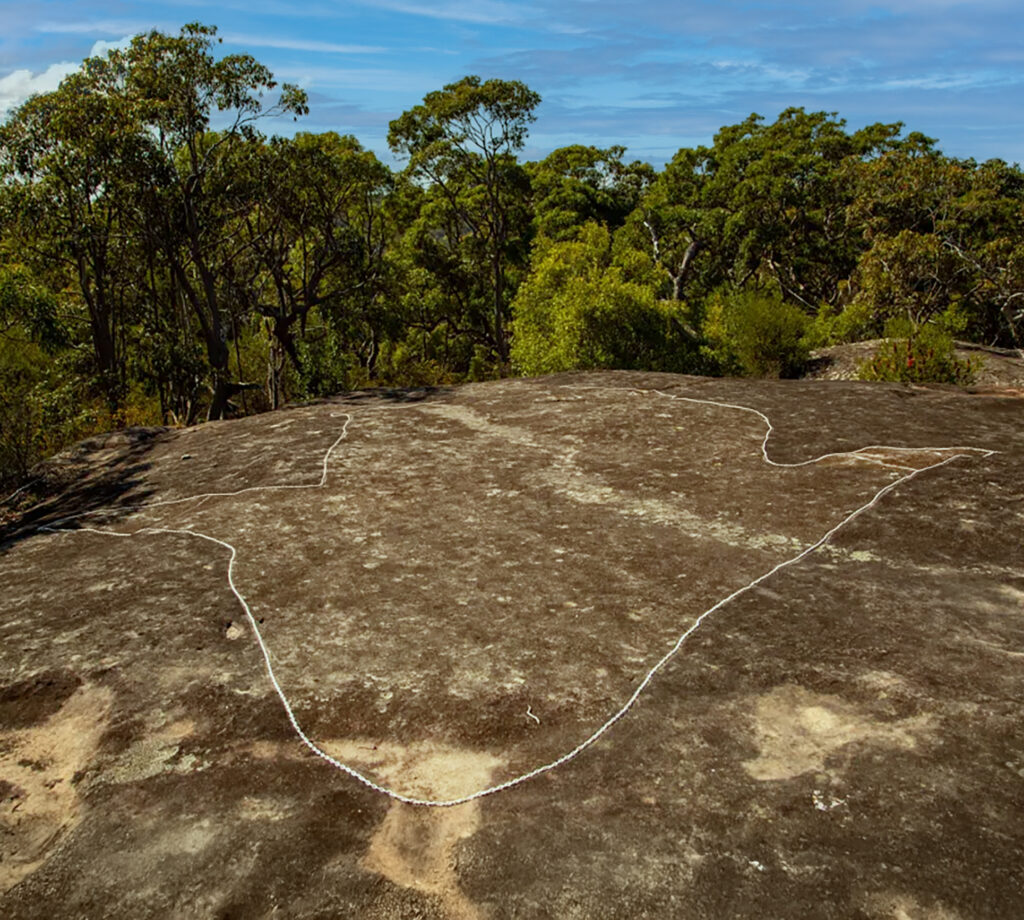
The Central Coast is home to over 2,900 registered sites of cultural significance, illustrating the world’s oldest continuous living culture.
You’ll find these southward-migrating whales in national parks across the region, home
to around 100 recorded significant cultural sites, including rock shelters featuring art and engravings, middens and grinding grooves.
Here are the best whale-watching locations on the Central Coast.
Join Tim Selwyn on Country on a Girri Girra Walking Tour.
Main image: Liz Ginis