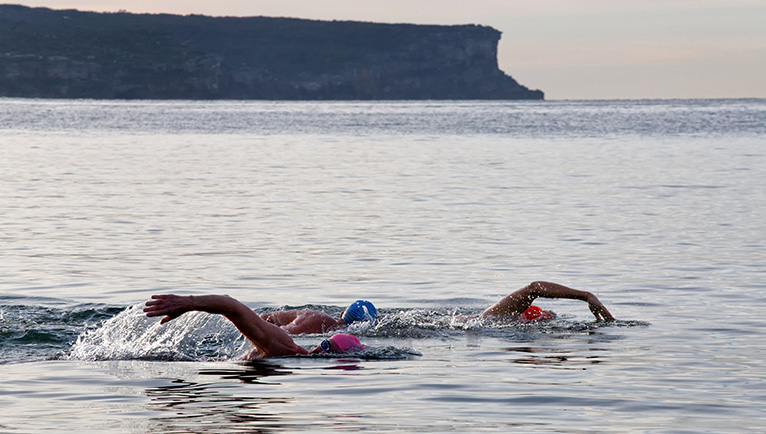


When you think of the Central Coast, what comes to mind? The beaches, for sure, but what else? This summer, the COAST team wanted to share some of the region’s most recognisable landmarks; our quintessential attractions, both natural and made, that are unique to the community. Many have been enjoyed by generations of local families and have featured heavily in the childhood holidays of visitors. Far from an exhaustive list, here are some of our old favourites.
CODOCK II and MERINDA II, Brisbane Water
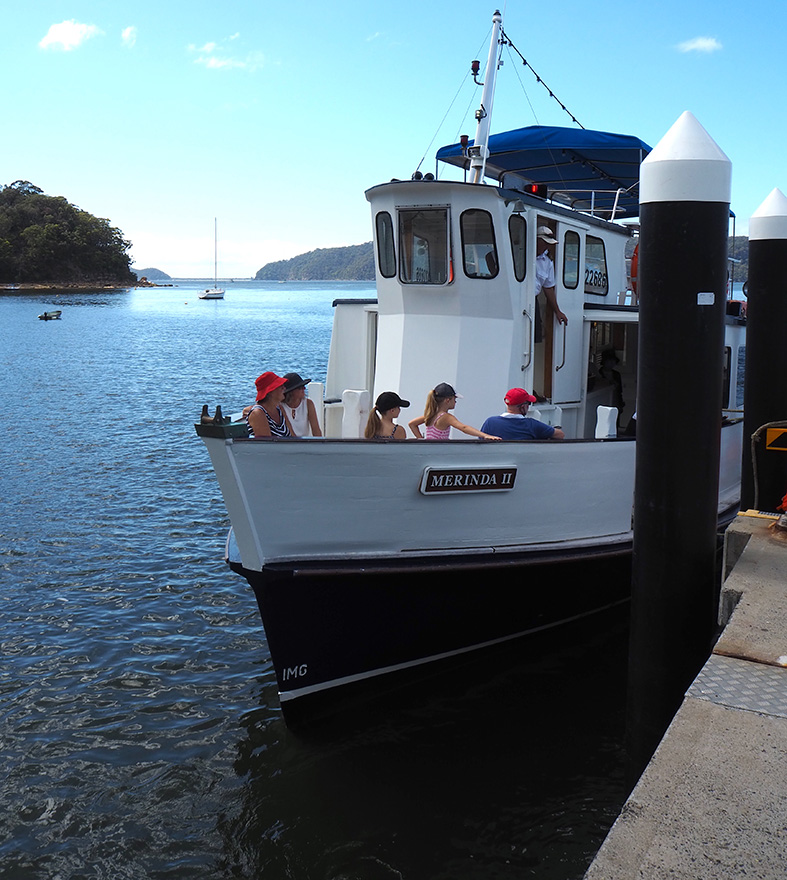
Brisbane Water locals and visitors will be all too familiar with the delightful old dame Codock II, a heritage ferry that’s more than 80-years-young (see main image). A star of the Davistown Putt Putt Regatta & Wooden Boat Festival, held every October, Codock II is also a firm favourite with photographers. In her early days, she ferried Cockatoo Island employees and also transported special guests around Sydney Harbour. For almost 20 years, Codock II has been gracing Brisbane Water, plying the waters between Woy Woy, Hardys Bay and Ettalong Beach for Central Coast Ferries. Just around the corner from Ettalong, you may have also see Merinda II travelling between Patonga and Palm Beach. The 50-foot timber ferry was built in 1983 and is operated by Boathouse Ferry Co.
PLODDY, Somersby
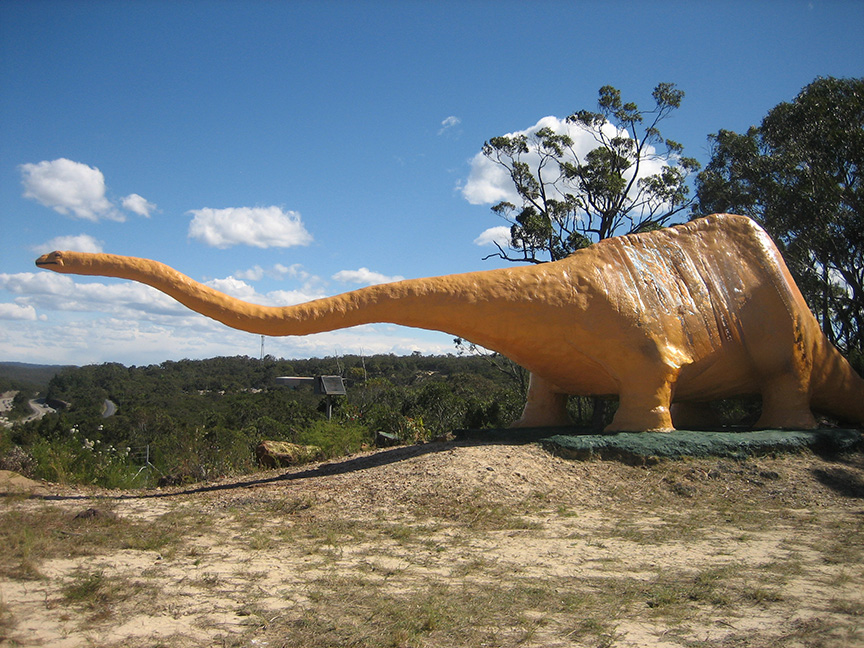
If you’re a Sydney commuter or just returning to the Coast, seeing Ploddy the Dinosaur atop the hill at Somersby says you’re almost home. But did you know Ploddy, said to be Australia’s first ‘big’ roadside landmark, hasn’t always overlooked the M1? The 26-metre concrete diplodocus was built in 1963 for the Australian Reptile Park when it was still located in Wyoming. The Reptile Park moved to the Somersby site in 1996, with the yellow Ploddy travelling as the guest of honour in a street parade through Gosford.
GOSFORD OLYMPIC POOL, Gosford
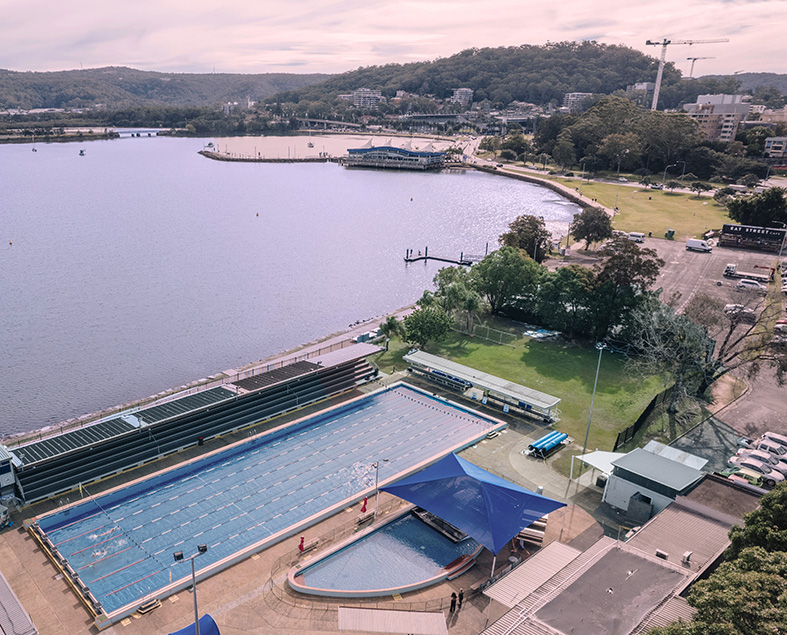
Calls to bulldoze a ‘tired’ Gosford Olympic Pool in 2017 were thankfully rejected, with the harbour-front facility remaining one of the Central Coast’s most frequented attractions. Opened in time for Christmas in 1965, the pool has turned 60 this summer and remains popular with families, schools and swim groups, including Gosford Stingrays Swimming Club, founded in 1955. The facility sees more than 200,000 attendances annually, according to Central Coast Council records.
Its origins trace back to the ocean baths that once existed near the current boat ramp, reflecting the Coast’s long-standing tradition of water-based leisure. The complex features a heated 50-metre outdoor pool, a toddlers’ wading pool and heated indoor pools. The changerooms were recently renovated, with accessible changerooms added. As an integral part of the Gosford waterfront, Gosford Olympic Pool may well see further changes by the NSW State Government when the Gosford Waterfront Redevelopment plans are announced in the future.
CENTRAL COAST CONSERVATORIUM OF MUSIC, Gosford
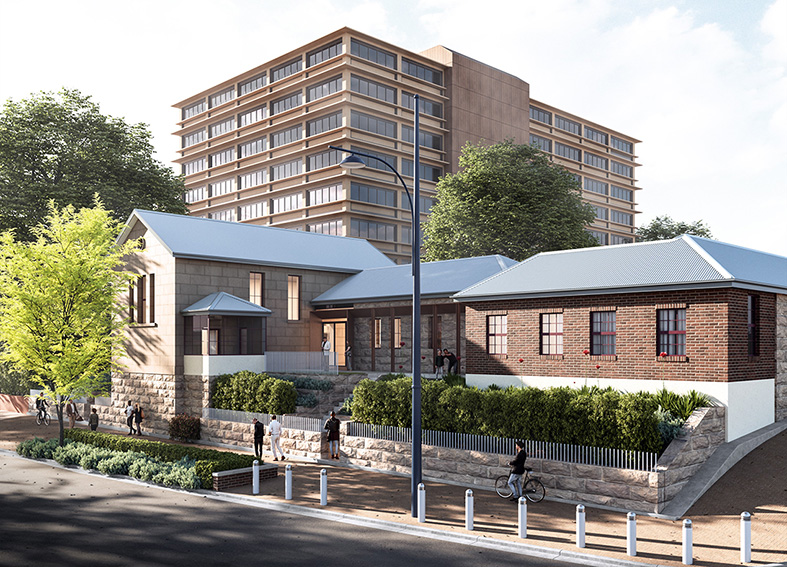
As one of the region’s original settlement hubs, it’s no surprise Gosford’s CBD is home to what’s thought to be the oldest public building on the Central Coast. The heritage building that now houses the Central Coast Conservatorium of Music dates back to 1849 and was originally a police station and courthouse. The 19th-century Gosford Courthouse included a clerk’s room, magistrate’s room, three thick-walled cells, a constable’s room and a yard. In the 1880s, significant renovations added a new courtroom and veranda. In the late 1970s, the site was transformed into the Music Centre and was renamed as the Conservatorium in 1993. (It’s said the renovations awakened three ghosts, one of whom made an unexpected and mysteriously translucent appearance in a photograph, posing among a small group of visitors.) The building has recently been added to the NSW State Heritage Register, recognising its significance as a key historical landmark.
AVOCA BEACH THEATRE, Avoca
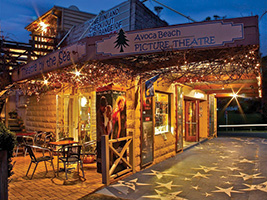
It could be claimed that you’re not a local until you’ve watched a film at Avoca Beach Theatre. This quaint family-run cinema is a local treasure best known for screening independent and foreign films, although you can watch new releases there too, as well as catching one of the many live musical performances. The theatre began in 1948 in the gardens of its original owners, two brothers, who were fundraising for the construction of the Avoca Beach rock pool. Not long after, a permanent theatre was built, and over the decades a gift shop and candy bar were added, as well as alfresco screenings on the adjoining lawns.
CROWNE PLAZA TERRIGAL PACIFIC, Terrigal
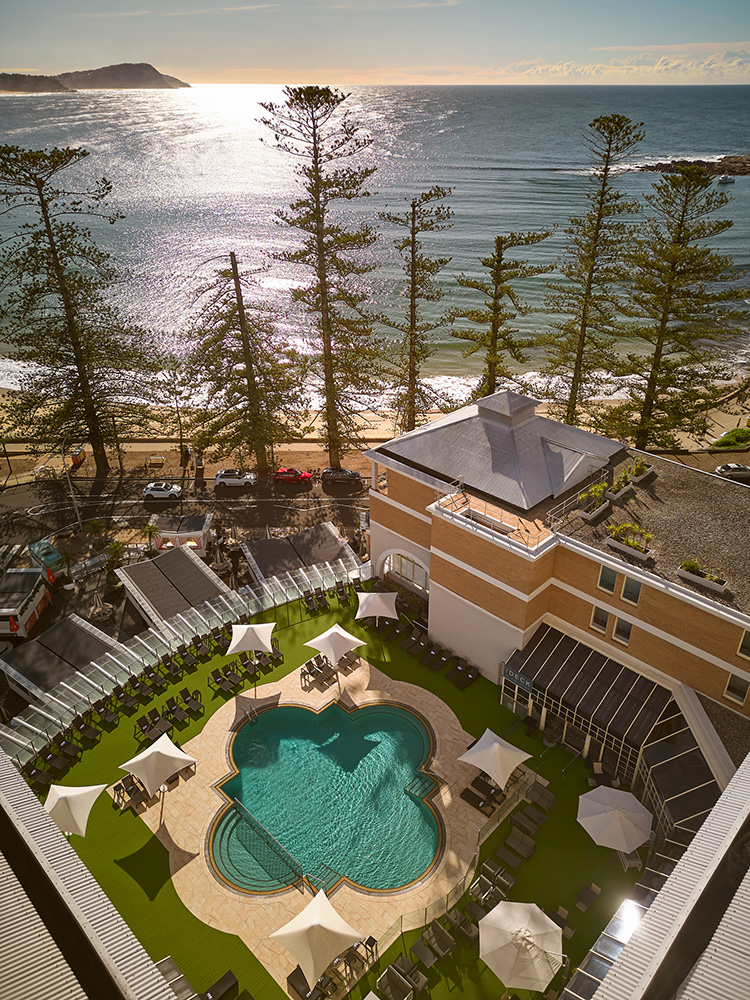
The popularity of Terrigal as a tourist destination can largely be attributed to ‘the pink palace’, which helped put the postcode on the map. Back then, it was Peppers by the Sea, which opened around 1989-1990 (reports vary). The same plot of beachfront land was previously home to two other accommodations. The Strath-Haven guesthouse came first in the early 1900s, followed by Hotel Florida, writes local author Peter Fisher (Wish You Were Here, 2024). Some locals still refer to the property as Peppers even though it was taken over by IHG and rebranded as a Crowne Plaza in 1992.
‘In many ways, this historic lot of land has helped to shape and lead Terrigal’s tourism industry to what it is today,’ writes Fisher.
THE LONG JETTY, Long Jetty
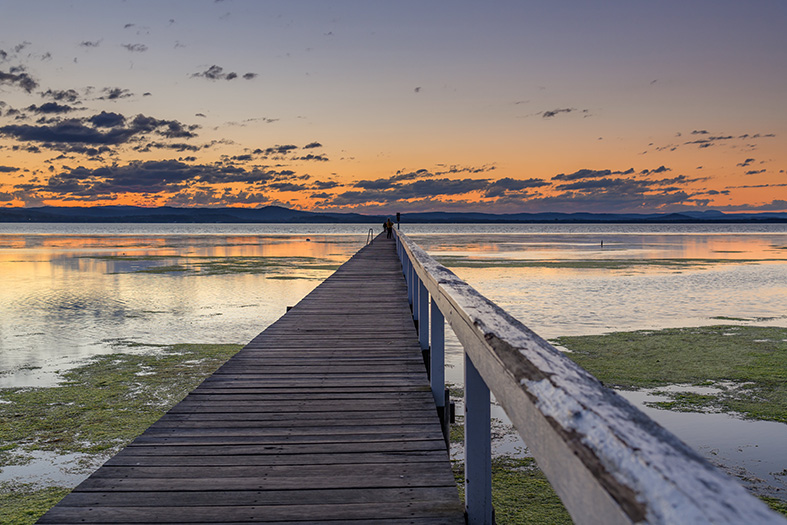
Popular with photographers, the timber jetty that gave Long Jetty its name was built in 1914 to service a private estate. A year later, the jetty was taken over by the then Erina Shire Council, and became a ferry stop for transporting people to and from Wyong. Passengers would wait in a large shed at the end of the jetty, while swimmers dived off platforms. The original jetty was washed away in a flood in 1927 but was rebuilt longer and now extends 351 metres into Tuggerah Lake.
THE GRANT McBRIDE BATHS, The Entrance
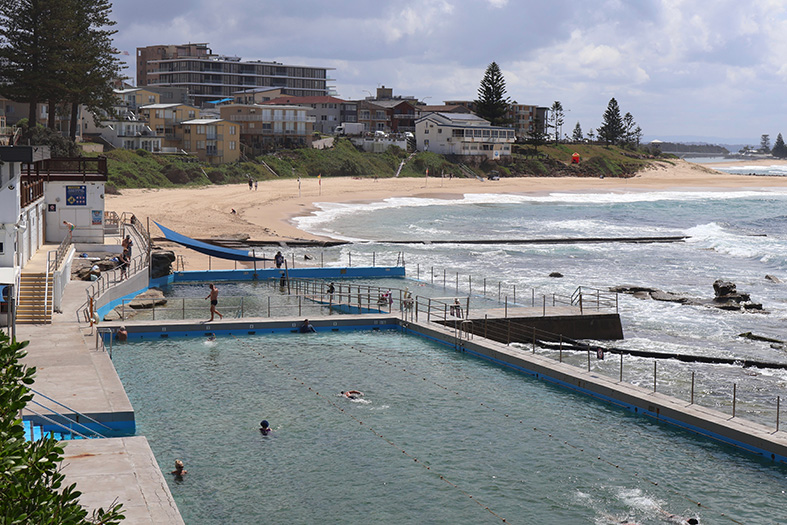
Every summer, tourists join local swimmers in the pools of The Grant McBride Baths. You’ll find the daily ‘lappers’ there in winter too, but it’s when the weather warms up that this beloved feature of our coastline proves its popularity. Open year-round, the free public baths include a 50-metre pool, 22-metre shallow pool, and children’s wading pool.
Built in stages between 1938 and 1965, The Entrance Ocean Baths (as they were then called) faced potential closure in 2002. But, according to the Central Coast Council, Grant McBride, then State Member for The Entrance, campaigned with residents to save the treasured swimming spot.
Over 9,000 signatures were collected during the campaign and, in 2003, the baths were successfully placed on the NSW Heritage List.
Former NSW Premier Bob Carr officially reopened the baths in 2005, and in 2018 they were renamed in Grant McBride’s honour. From the pools, another historic attraction looms large on the cliff: The Entrance Surf Club, with its clubhouse that dates back to 1936.
THE FERRIS WHEEL AND CAROUSEL, The Entrance
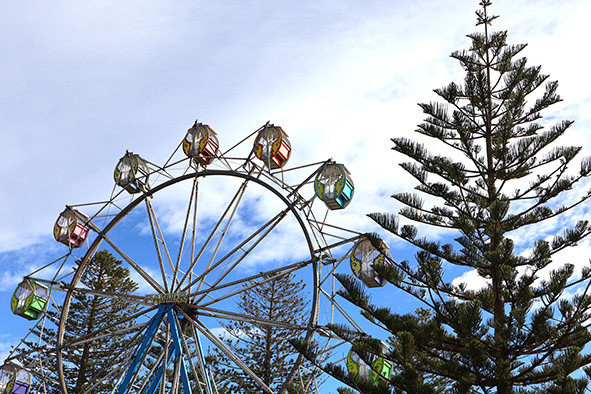
It seems like the ferris wheel in Memorial Park at The Entrance has been there for decades, yet it’s only been a landmark since the summer of 2017. Owner Brenton Pavier bought it second-hand from America and refurbished it to Australian standards.
‘It’s the biggest one-semi-trailer ferris wheel in the country,’ says Pavier.
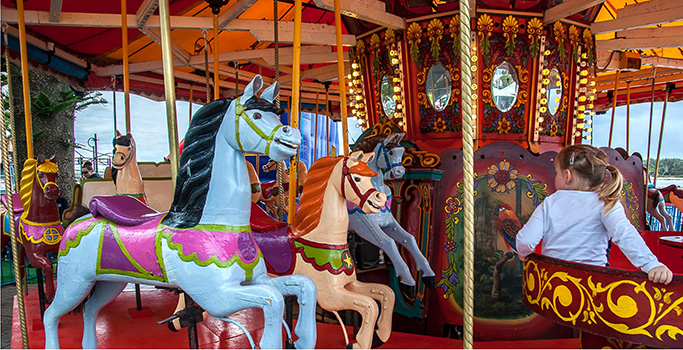
Although this current ferris wheel has been spinning here for eight years, Pavier says his family has been part of The Entrance’s amusement scene for five decades and ran rides, including a smaller ferris wheel near the bridge. On the pavement near the bridge, you’ll still find the historic merry-go-round, which has stood near the water’s edge for around a hundred years (reports vary). The ride was steam-powered until the early 1950s, and around 1980 it was significantly
restored. Today, you can still ride the carousel, enjoying the beautifully nostalgic wooden horses and carriages.
NORAH HEAD LIGHTHOUSE, Norah Head
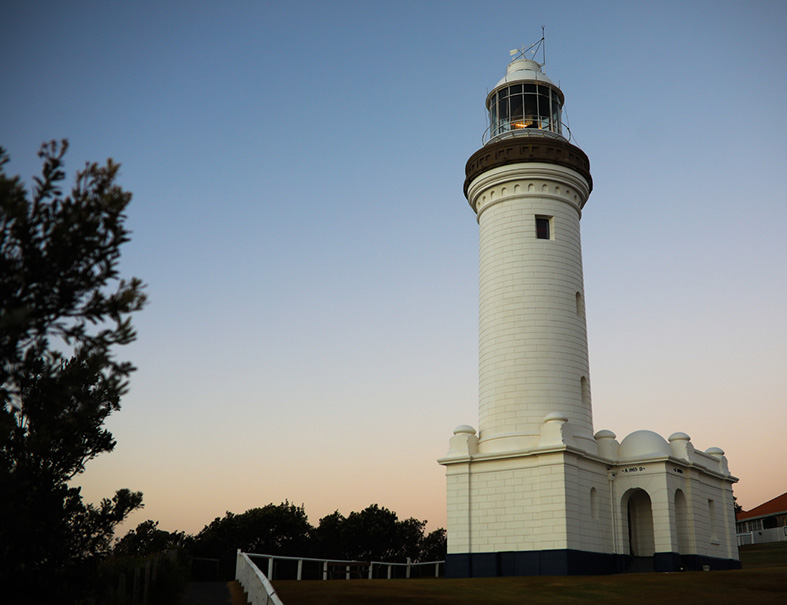
‘Once perilous, now safe’ is etched on the glass panel of the original door of Norah Head Lighthouse, which has stood strong since 1903. As one of the Coast’s most iconic attractions, a visit to the northern end of our region isn’t complete without stopping by to learn her history. The lighthouse and surrounding reserve are run by 60 volunteers who also regularly take visitors on tours to the lighthouse’s narrow balcony; but beware there are 96 stairs to climb to get there. The 27-metre-high lighthouse sits 47 metres above sea level. After your tour, be sure to wander down to the sand for a beachcomb or picnic.