
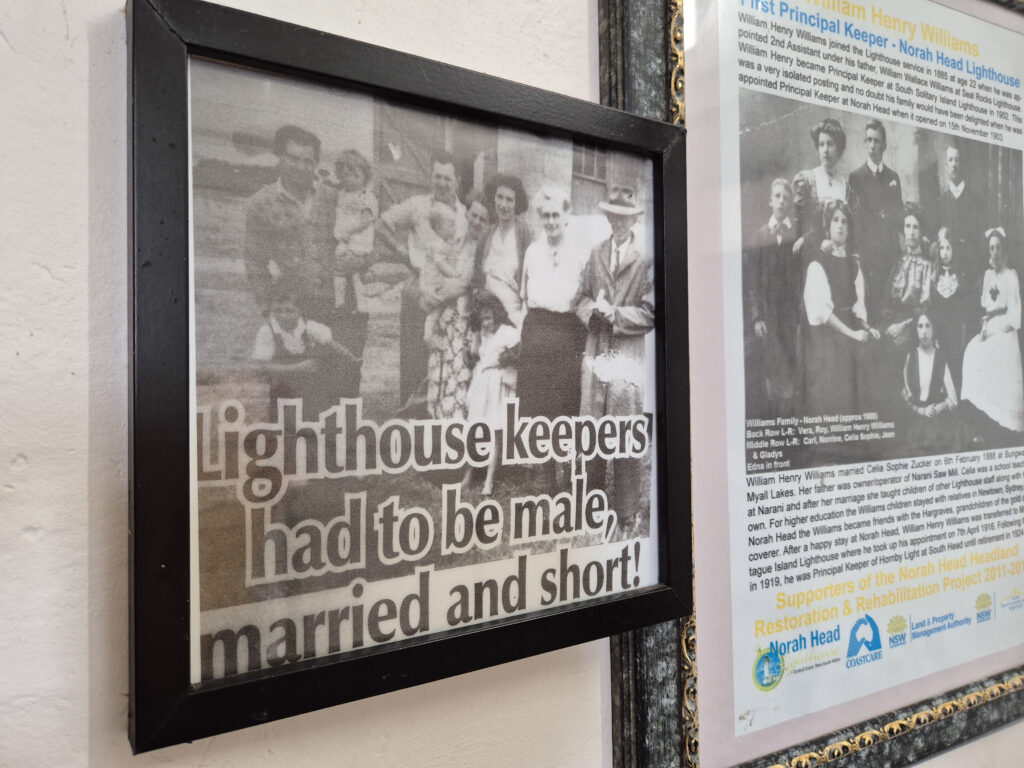
My guide explains, ‘The lighthouse keepers had to be male because they had to be strong. Married to combat loneliness, and short so that they could climb into the small, cramped area between the lens and the light source.’
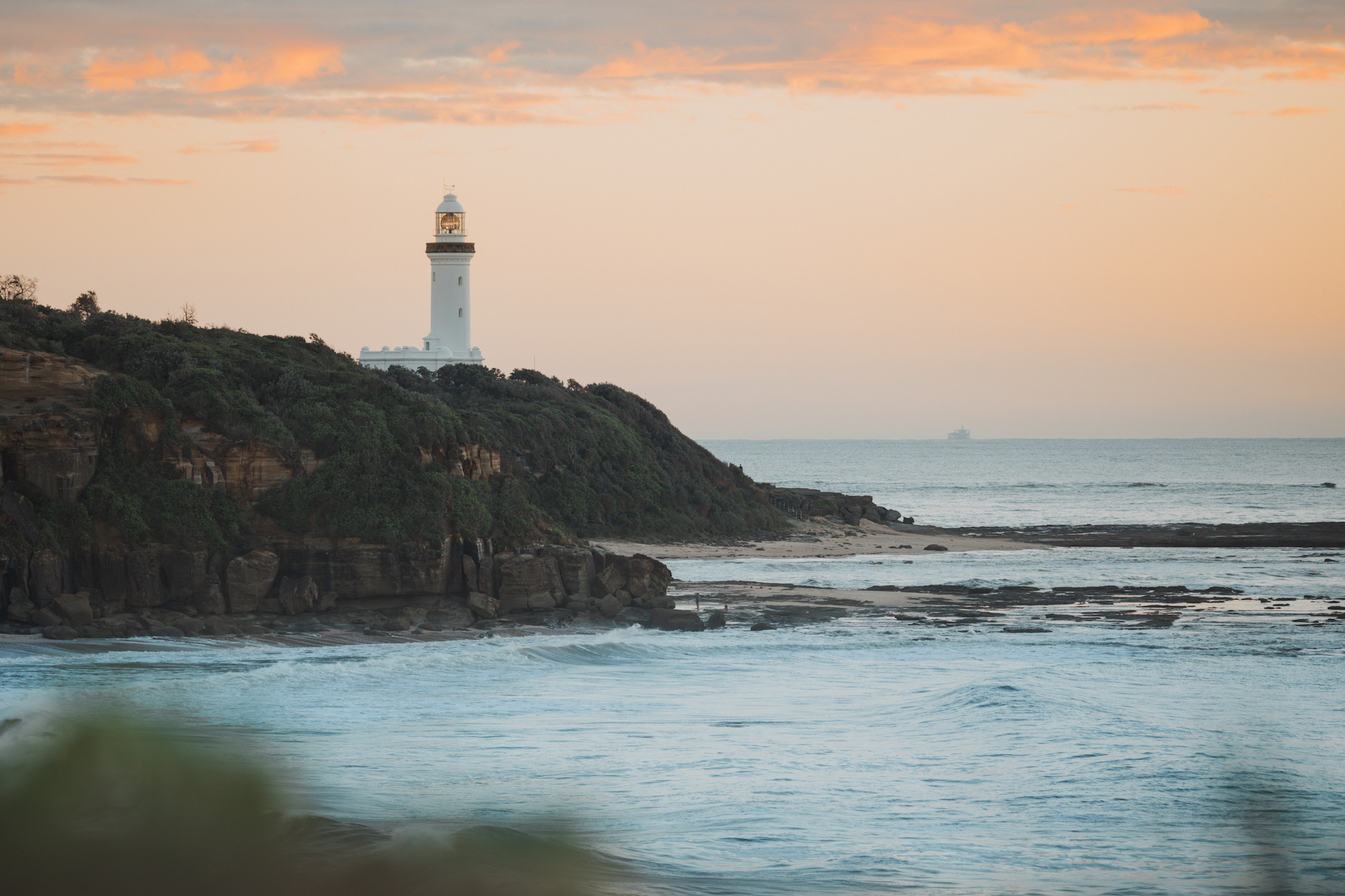
We’re standing in the entrance hall on the ground floor of Norah Head Lighthouse. Etched in the glass of the door is the saying ‘Once perilous now safe.’ Across the hall is a ghost entrance. Southerly winds blasting through made the entry unworkable and it was bricked off.
Puffing slightly after climbing the 96 stairs that wind around a central cast-iron pole, we step into the lantern room. In 1903, when the lighthouse opened, a vaporised kerosene lamp provided a light source that was visible up to 18 nautical miles (33 km). Today, the light comes from a 1000W halogen globe.
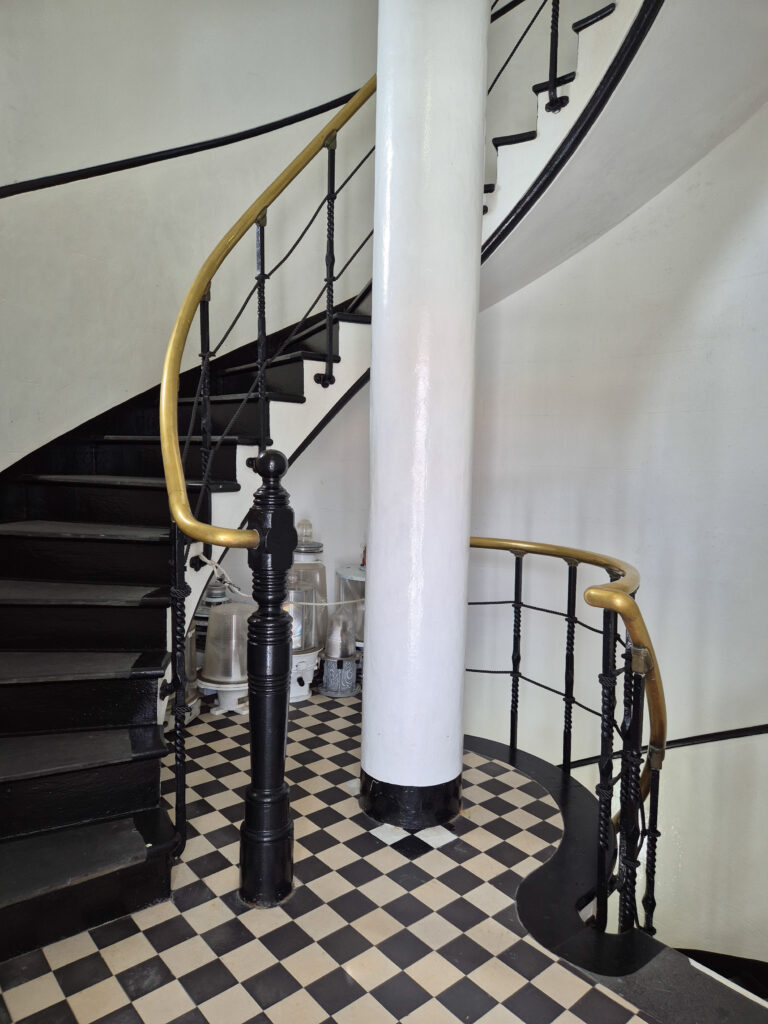

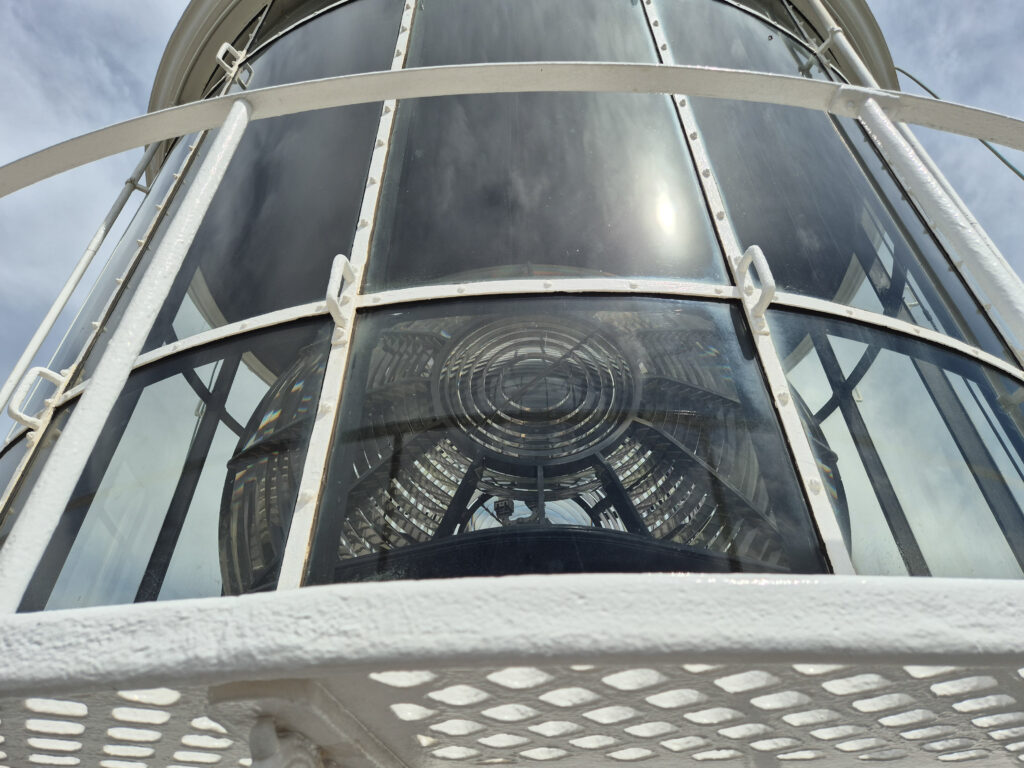
Every lighthouse has a different light signature. At Norah Head, the light flashes every 15 seconds as the lens, consisting of 700 glass prisms, rotates around the lamp. Initially the lens was driven by 300 kg weights lowered through the central pole at a speed controlled by a series of gears. The keeper took an hour to raise the weights by cranking a handle in the lantern room.
During the day, when the lens was still, sunlight, refracted through the lens, had the potential to start a bush fire in the thick bush behind the lighthouse. Curtains were therefore hung to keep the sun out.
Electricity was connected in 1961 and it became fully automated in 1995. These days, the lens turns 24 hours a day. If it stops for any reason, the curtains continue to keep the bush safe.
Watching our heads, we step through the low door onto the bluestone balcony. Big brass plates fit snugly into the bluestone blocks, holding the wall in place. On a clear day, Sydney’s skyline, 74 km to the south, can be seen ‘floating’ above the water off the furthest headland.
Looking north towards Newcastle, beyond the rock platform exposed by the low tide, a white-water wash hints at the treacherous reef below. It was because locals witnessed so many shipwrecks off Norah Head that they petitioned the government to build a lighthouse.
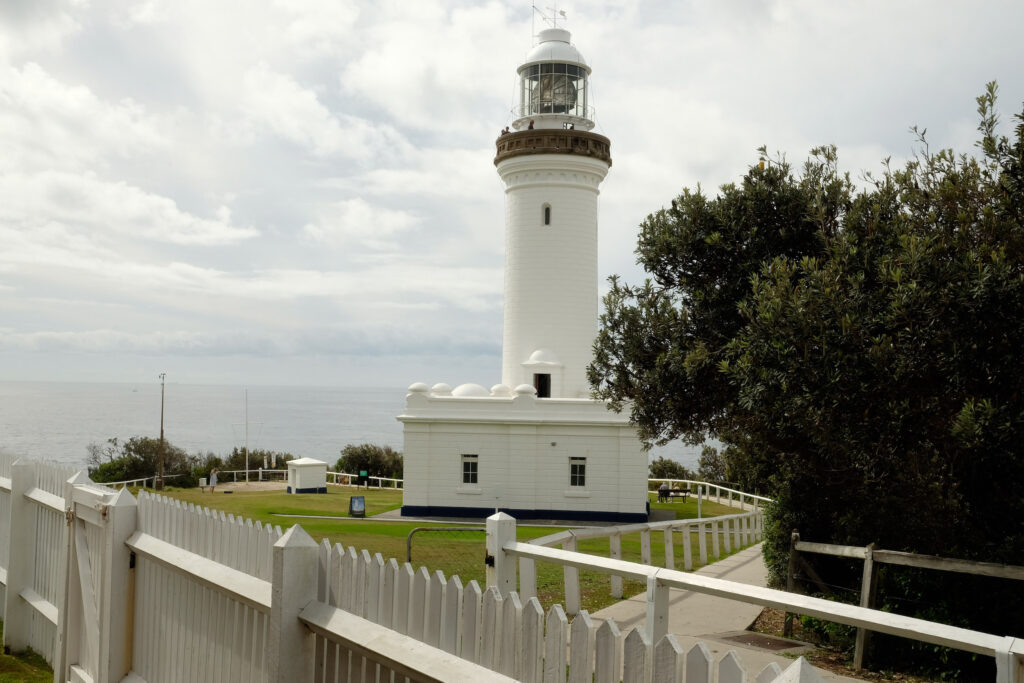
The lighthouse was built layer-by-layer from pre-cast concrete blocks. They were produced on-site with local aggregate. During the day, the distinctive silhouette formed by the domes and ‘mushroom’ caps on the first balcony let sailors know that they were off Norah Head.
The only rectangular window in the barrel (tower) shines red at night. This secondary warning system alerts ships that they are too close to shore. When they are about 7 km offshore and can no longer see the window, they’re safe.
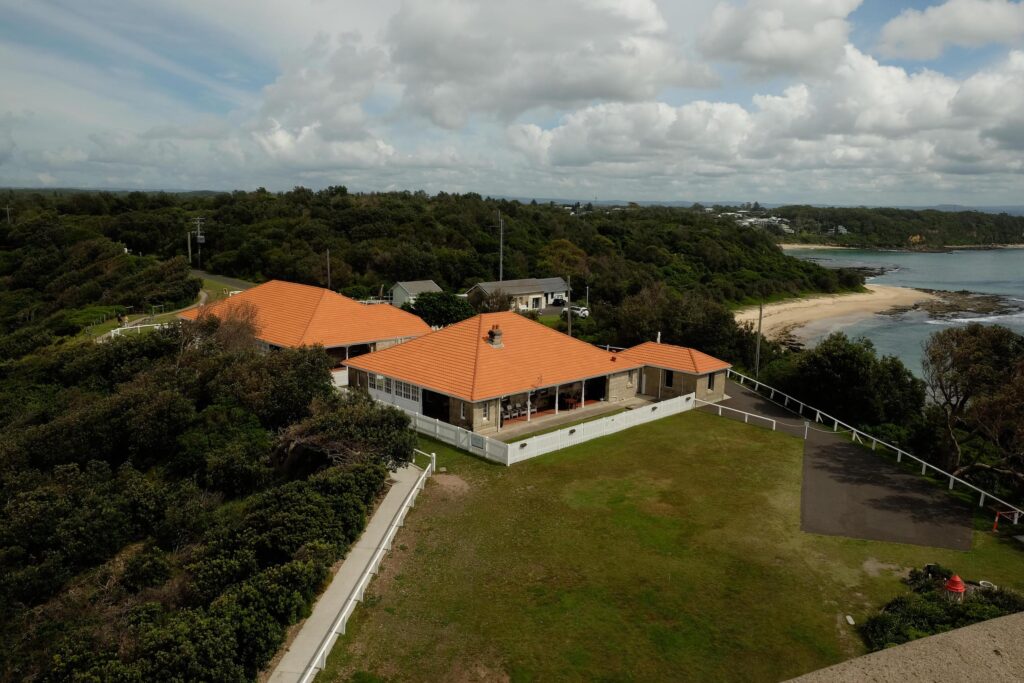
Lighthouse keepers no longer live on site as Transport for NSW (Maritime) maintains the lighthouse, but visitors can experience life as a lighthouse keeper by staying in a keeper’s cottage.
SHINING A LIGHT ON HISTORY
Norah Head was first named by European settlers as Bungaree Norah (Ngurra) after Matthew Flinders’ famous Aboriginal circumnavigation companion. Ngurra is said to signify that it was Bungaree’s ‘place of origin’. It later became known as Norah Head but both versions were in use when the lighthouse was built.
The lighthouse is surrounded by an extensive rock platform that breaks into bomboras-black stone reefs and submerged rock pillars. Coupled with coastal fogs and storms, it is little wonder that at least 36 ships have been known to be wrecked in the area.
Among the shipwrecks are the Ceres in 1836, Anne Maria in 1857, Suffolk in 1859, Esperanza in 1868, Janet Dixon in 1870, Tim Whiffler in 1871 and Gwydir in 1894.
Edward Hargraves, a prominent local resident and ‘father’ of the 1851 Australian Gold Rush, witnessed the tragedy of several shipwrecks near his Noraville home and became a strong advocate for establishing the lighthouse.
USEFUL INFORMATION
Volunteers run lighthouse tours (weather dependent) from 10 am every day (except Christmas Day and Anzac Day). The last tour is at 1.30 pm. No booking is required.
The kiosk has maps of short walks around the lighthouse.
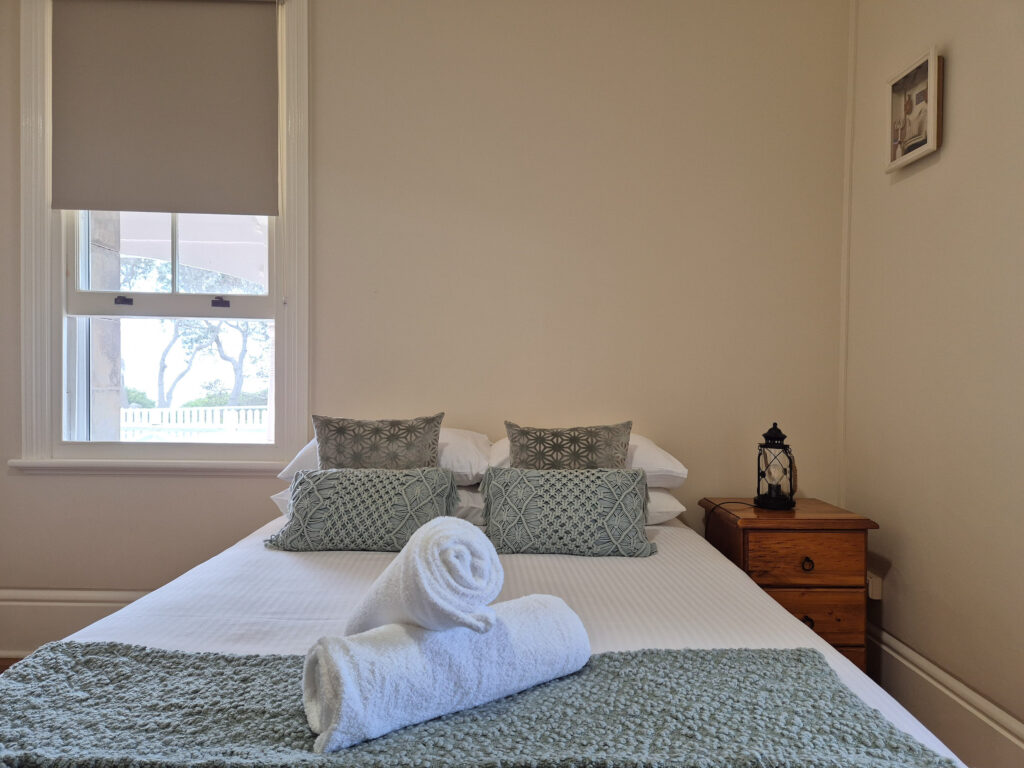
You can stay in one of the three 3-bedroom, 1-bathroom self- contained cottages, which each sleep nine.
Discover more and book your tour.
Main image: @fromabove.images